
17 septembre 2025
Robot testing in extreme conditions at Université Laval
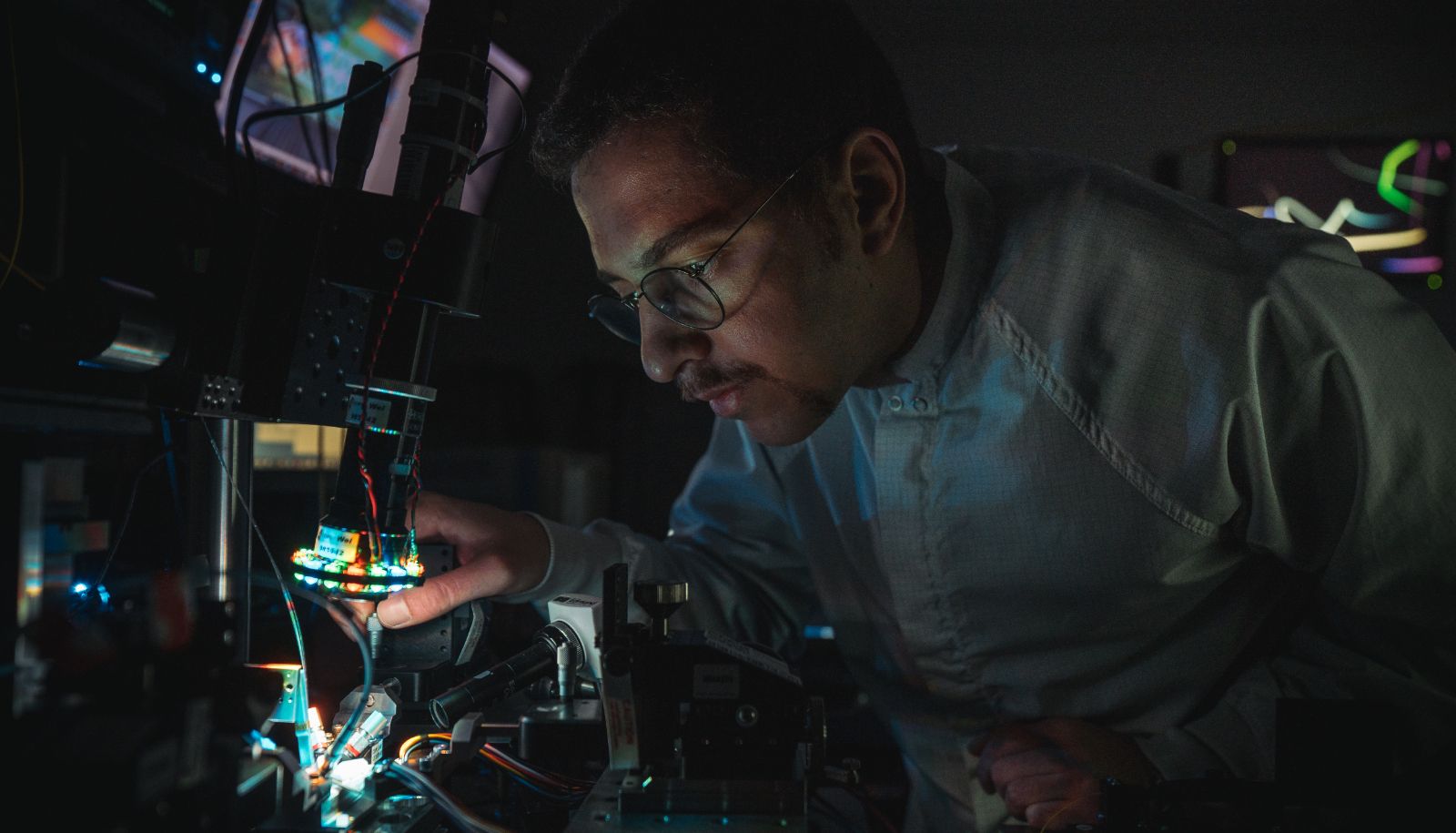
Université Laval's Boreal Robotics Laboratory (NorLab) is beginning research to enable autonomous robots to meet the challenges of navigating in subarctic environments.

'%3e%3cpath%20d='M306.615%2079.694H144.011L892.476%201150.3h162.604ZM0%200h357.328l309.814%20450.883L1055.03%200h105.86L714.15%20519.295%201200%201226.37H842.672L515.493%20750.215%20105.866%201226.37H0l468.485-544.568Z'/%3e%3c/g%3e%3c/svg%3e)


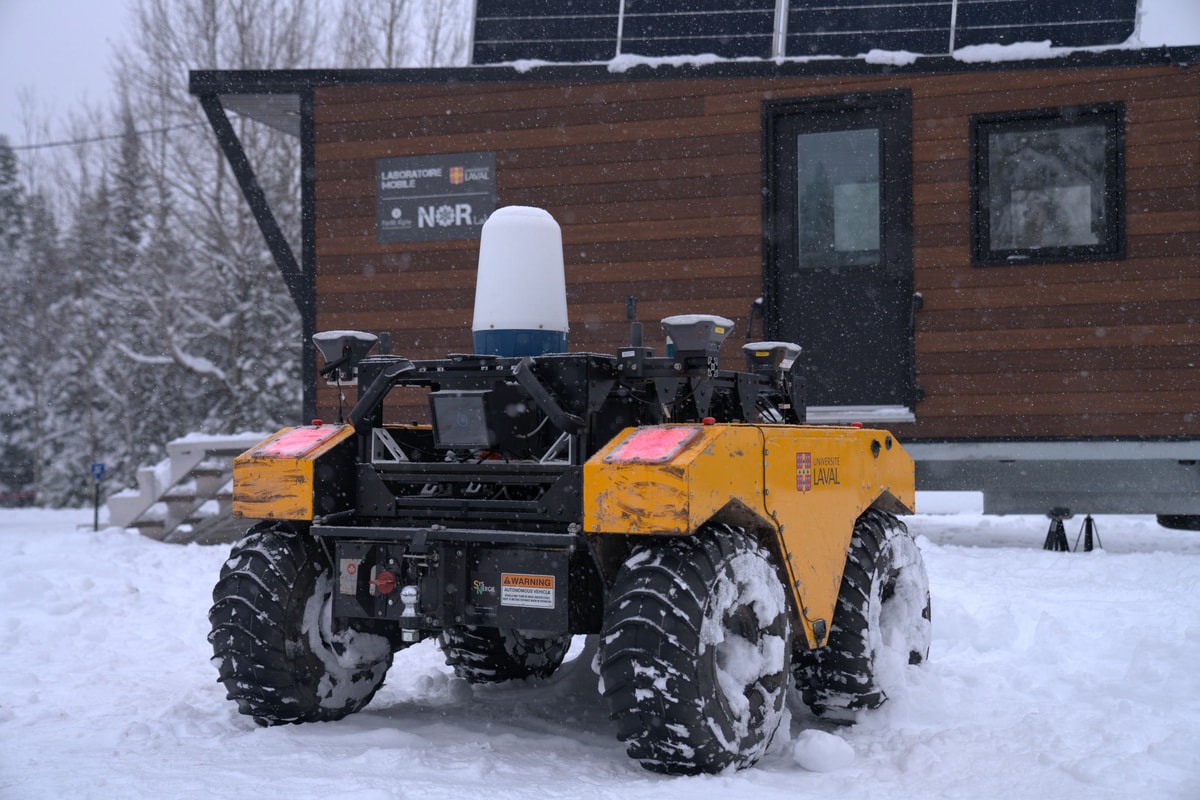
Robots were tested in the winter conditions of the Forêt Montmorency
— Université Laval - Sandrine Gilbert
Under the direction of Professor François Pomerleau of the Department of Computer Science and Software Engineering, holder of Chaire de recherche du Canada en robotique de terrain and director of NorLab is receiving $3 million from the Natural Sciences and Engineering Research Council of Canada (NSERC) under the Alliance program, along with over $3 million in cash and in-kind funding from three major partners, for a total of over $6 million over five years. This project, called CRYOTIC, will draw on various public and private partnerships to test the state-of-the-art robotics in the boreal environment in order to evaluate its performance and push its limits.
Professor Pomerleau emphasizes that "the boreal environment is an extreme context for robotics due, among other things, to precipitation and snow accumulation, which modify the landscape and disrupt sensors. For example, the presence of ice and snow on the ground modifies the grip between the mobile robot's tracks and the ground. This variation in traction requires recalibrating the autonomous vehicle's controller parameters each time the robot is deployed.
The CRYOTIC project focuses on three research areas: perception, navigation, and movement. By collaborating with partners such as Defence Research and Development Canada, General Dynamics Land Systems-Canada, and Hydro-Québec, the goal will be to develop applications that require significant advances in knowledge to be successfully executed. “These applications include long-distance resupply missions in off-road conditions, transmission line inspection, and substation monitoring. Expected results range from sensor characterization and the proposal of new algorithms to comparative evaluation and demonstration of the effectiveness of environmental monitoring systems,” adds Professor Pomerleau.
Innovation and partnerships are central to the success of this project. By working in partnership with a variety of organizations, "this project will provide practical solutions for real-world applications that can be transferred to industry. By addressing the challenges of perception, navigation, and movement, the project aims to improve the autonomy and resilience of autonomous vehicles operating in harsh winter conditions, such as those experienced in Canada. Congratulations to Professor Pomerleau and the NorLab team for their innovation in addressing complex challenges such as those of Nordic conditions," said Sophie D'Amours, Rector of Université Laval. Partners involved in pushing the limits of robots' capabilities. In a rapidly changing world where repetitive tasks and labor shortages are omnipresent, the CRYOTIC project will, for example, make it possible to inspect critical infrastructure and resupply remote camps using autonomous robotic systems.
« Université Laval’s exceptional faculty and dedicated students establish it as a preferred research partner for advancing autonomous navigation technologies. Through the CRYOTIC project, General Dynamics Land Systems-Canada is able to collaborate on cutting-edge research with academia, industry, and government, positively enhancing defense and power generation infrastructure technologies », mentions Richard Lee, Advanced Capabilities Principal Engineer at General Dynamics Land Systems-Canada.